 |
||
|
Saturday, December 11, 2010
just to revive this blog. here are some interesting videos PRSS g.y blows at 12:38:00 AM. Tuesday, June 22, 2010
Okay Guan Yue-ers. Peiyun here! you senior from the ex ex batch. i'm here to post because i think it's time for me to re-connect with all my guan yue peeps. i'll be back to see sectionals when i'm free soon kay! so people, don't let me catch you slacking! on a side note, as i've said i'm going to make the move to re-connect with you people as i seriously think i have a generation gap with you people already, i wanna add you peeps on msn. some of them i've added via the help of Tricia (: the rest of you, please add me on Msn and Facebook kay. Janequek@hotmail.com shall meet up with the guan yue people soon! (: see you! PRSS g.y blows at 1:18:00 AM. Friday, June 18, 2010
         PRSS g.y blows at 5:19:00 PM. GOOD NEWS TO ALL! PRSS 25TH ANNIVERSARY SEIZE THE MOMENT ESPLANADE CONCDERT was a success! photos will be uploaded tmr if there's time.. TYYS all for ur effort and time u put in! have a good rest tonight and sweet dreams! JIAYOU! GAMBATAE! -cys PRSS g.y blows at 12:00:00 AM. Wednesday, June 9, 2010
PRACTICE SCHEDULE FOR THE HOLIDAY 10062010 thurs: 9am to 1pm (combine); 2.30pm to 6pm (esplanade rehearsal) 11062010 fri: 4pm to 8pm (esplanade rehearsal) 12062010 sat: 9am to 1pm (esplanade rehearsal); 3.30pm to 6pm (combine) 14062010 mon: 2.30pm to 6pm (esplanade rehearsal) 15062010 tues: 9am to 1pm (combine) 16062010 wed: 2.30pm to 6pm (esplanade rehearsal) 17062010 thurs: 9am to 10pm (actual performance at ESPLANADE CONCERT HALL) PRSS g.y blows at 11:24:00 PM. Monday, April 26, 2010
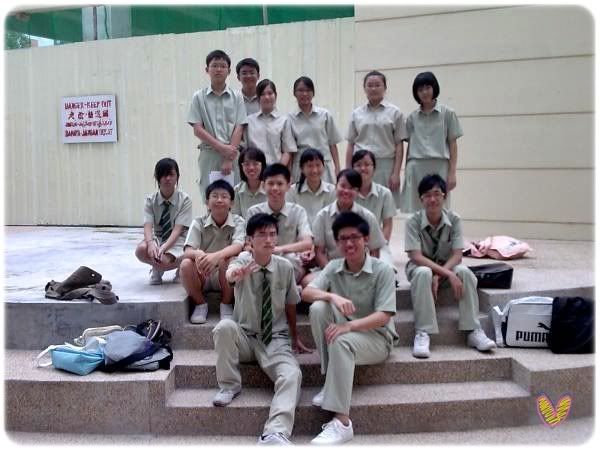
  a group photo taken on the last day of co for sec 4s PRSS g.y blows at 10:25:00 PM. Friday, April 9, 2010
UPCOMING CONCERTS!=)) 24th April (Sat): Nanyang Junior College Chinese Orchestra and Guzheng Ensemble Concert 7.30pm, Singapore Conference Hall Ticket price: $10 People you may know (If you do, great! I would prefer you hound them instead...): Michelle Kan, Tan Qiaohui, Leow Zihui, Tan Junyuan, Alina Mak, Ong Junhe, Ding Xiao Yan... 30th April (Fri): Meridian Junior College Chinese Orchestra Concert 7.30pm, Meridian Junior College, Hall Ticket price $6 People you may know (If you do, great! I would prefer you hound them instead...): James Lim, Lin Chu Qing, Brenda Lau, Tricia Poh, Pamela Tan, Dalston Leong, Tan Chu Ren, Tan Yin Chow (guest player), Jasmine Tan (Liu Hui), Chua Kok Nam, Mr Cheng Chung Hsien... PRSS g.y blows at 3:47:00 PM. Wednesday, March 24, 2010
      PRSS g.y blows at 9:58:00 PM. Monday, March 15, 2010
BON VOYAGE TO THOSE GG TO TAIWAN!~ FYI, there'll be no co practice this march holiday. TO PPL GG TO TAIWAN: - report at changi airport terminal one at 10.30am - report in pe tee and jeans - wear covered shoes - water is not allowed on plane - just bring an empty bottle if you want PRSS g.y blows at 6:53:00 PM. Saturday, March 6, 2010
ESPLANADE BEAUTIFUL SUNDAY CONCERT Venue: esplanade concert hall, 1st level Time: 3pm sharp Price: FOC Seating: Free- seating Performers: Some of PRSSCO students do come by and support. =)) PRSS g.y blows at 6:20:00 PM. Sunday, January 31, 2010
pics are taken from FELICIA=))                ALL THE BEST TO PPL TAKING COMMON TESTS~~! JIAYOU!~ GAMBATEH~ PRSS g.y blows at 6:55:00 PM. Friday, January 22, 2010
ps! just being lame.. =))        PRSS g.y blows at 5:06:00 PM. Saturday, January 9, 2010
just a few pics for cca bazaar=))      PRSS g.y blows at 10:02:00 PM. Thursday, December 31, 2009
            PRSS g.y blows at 12:19:00 PM. |
The GUANYUERS
GY CRAVES more bonded♥[unity] GY LINKS
GY CHATTERBOX
Our Instruments Dizi 
Three main types of dizi are frequently used in the wind section: the bangdi, the qudi, and occasionally the koudi. The bangdi is shorter in length and smaller in diameter and produces a clear and bright tone. It is frequently used in bangzi opera of Northern and southern China, hence the name bangdi. The longer and thicker qudi produces a richer and mellower tone. The qudi is usually a fourth higher in pitch than the bangdi. The koudi is the highest-pitched of all dizis.
Sheng


The sheng is a Chinese free-reed bamboo mouth organ. The earliest type ever recorded in history had 14 pipes and was discovered in Zeng Houyi's tomb in Hubei province. The most common types of sheng today include a 17-pipe instrument and a modified version for contemporary compositions, which has an expanded range of 21-37 pipes. The tone of the sheng is lucid and bright. It has a huge range, a chromatically complete scale and is able to produce chord voicings.
Suona
 The tone produced by suona is loud, piercing and uplifting, thus it is usually used to perform vibrant and lively pieces. However, its repertoire also includes some mellower pieces. The suona is commonly used as an accompaniment in the Chinese opera, singing or dancing, but also for more sombre occasions, such as during a traditional Chinese funeral procession. It is also utilised in solos or ensembles for various occasions and ceremonies. | |